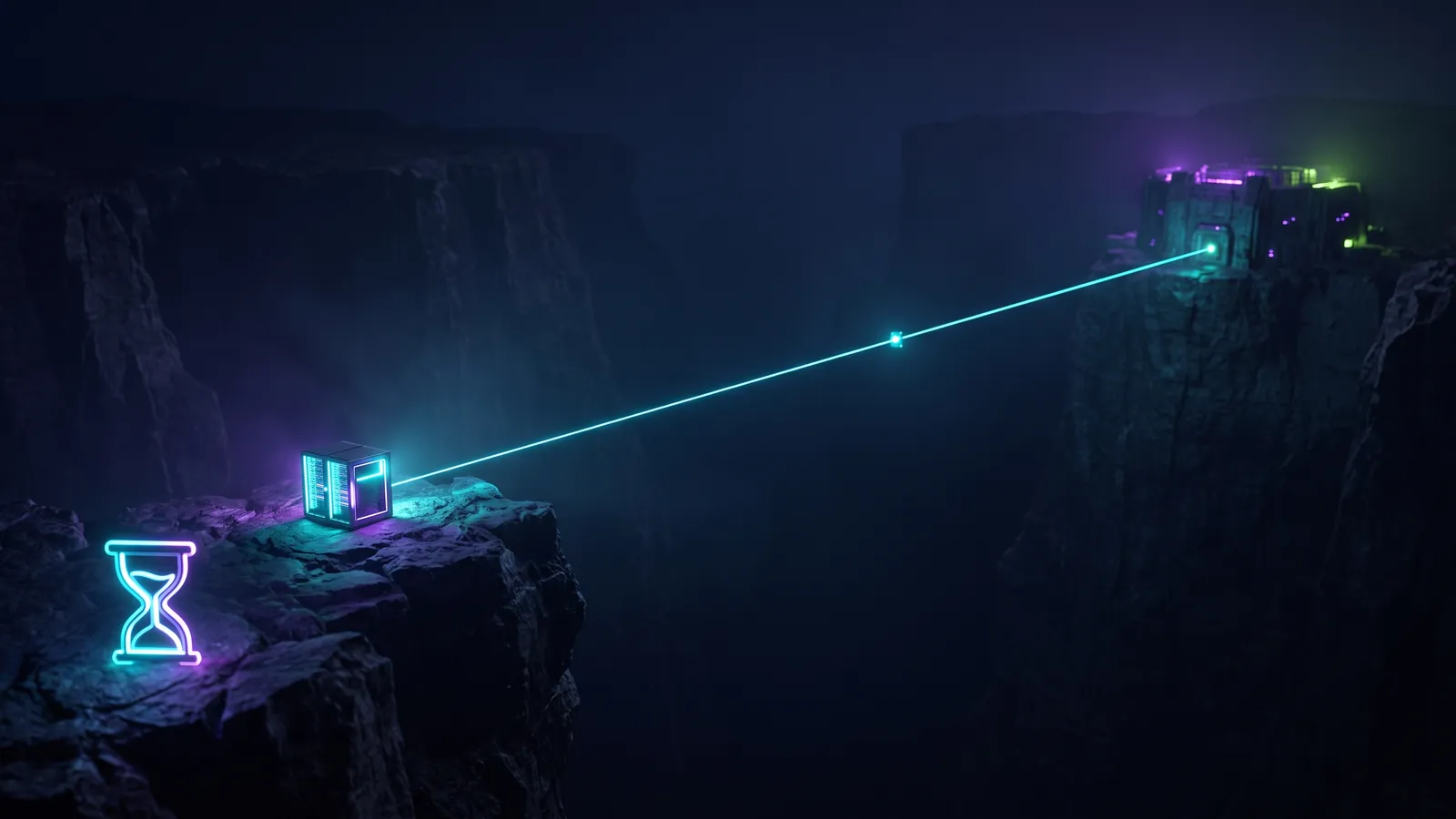
Why CDNs Make Far Servers Fast
Your server is 13,000 km away. Every hello pays for it.
Handshakes, encryption, copies and the fast lane, in plain language
Chapters
- Intro
- The speed-of-light tax
- The hidden hellos
- Enter the CDN
- Trick 1: Say hello nearby
- Trick 2: Keep copies close
- Trick 3: The fast lane
- Recap
Who it's for
Anyone curious why websites and AI apps load quickly even when their servers are on another continent, including non-technical viewers, product people and junior engineers. Every term is introduced after an everyday analogy.
Context
Shamira, in Mumbai, uses an AI chat app whose servers (the origin, with the GPUs and the model) are in a data centre in Virginia, roughly 13,000 km away. The app is a web page (HTML, scripts, fonts, images) plus live, personalised AI answers streamed from the origin.
Architecture
| Component | Role | Notes |
|---|---|---|
| Browser | Shamira's side of every connection | Does the TCP and TLS handshakes |
| Edge server (CDN PoP) | The CDN's server in Mumbai | Terminates TCP + TLS, caches static files |
| CDN backbone | The CDN's private network between its cities | Measured routes, warm long-lived connections |
| Origin | The app's servers in Virginia | Generates pages and AI answers |
Request flow
- Without a CDN: TCP handshake (1 round trip) → TLS 1.3 handshake (1 round trip) → HTTP request and first byte (1 round trip). About 3 × 200 ms = 600 ms before the first byte (TLS 1.2: one more round trip).
- With a CDN: both handshakes finish at the Mumbai edge (about 10 ms per round trip). The edge answers static files from its cache, and forwards everything else to Virginia over a connection that is already open.
The failure modes
- Distance itself. Each round trip to Virginia costs about 200 ms (illustrative), and a cold connection needs three of them before anything appears.
- Plain-text second leg. With TLS terminated at the edge, some setups send edge-to-origin traffic unencrypted (e.g. a "flexible" TLS mode). The browser still shows a padlock, but anyone on the long path can read the traffic.
- Cache busting. Random query strings on every URL, or cookies and
Set-Cookieon static files, make every request look unique or private, so the edge can't reuse copies and nearly everything goes back to the origin.
Why it happens
Round trips are bounded by the speed of light in fibre (about 200 km per millisecond) and by indirect routes, and connection setup needs several of them. Misconfiguration silently removes the CDN's protections and savings.
The fix
- SSL offload / TLS termination at the edge: handshakes happen close to the user; the edge keeps warm, reused connections to the origin.
- Encrypt the second leg: full/strict TLS from edge to origin, validating the origin certificate (or a private tunnel).
- Cache static assets: fingerprinted file names with
Cache-Control: public, max-age=31536000, immutable; HTML with a shorts-maxageplusstale-while-revalidate. - Keep URLs and cookies clean on static assets.
- Use the backbone for uncacheable traffic (live AI answers), with streaming over the warm connection.
Trade-offs
- Terminating TLS at the edge means trusting the CDN with decrypted traffic and certificates.
- Long cache lifetimes need fingerprinted file names, or users keep stale files.
stale-while-revalidatecan briefly show an old page.- Backbone routing and origin shields cost money and add another hop to debug.
Numbers worth knowing
- Light in fibre travels about 200,000 km/s: about 65 ms one way for 13,000 km in a perfect straight cable (physics).
- The 200 ms round trip, 10 ms edge round trip, 260 ms / 600 ms first-byte times and the cache hit percentages are illustrative.
- TCP handshake costs 1 round trip; a full TLS 1.3 handshake 1 round trip; TLS 1.2 2 round trips (RFC 8446).
How the server says: keep a copy
# Files with a fingerprint in the name
GET /app.3f9a2c.js
Cache-Control: public, max-age=31536000, immutable

# The page itself changes often
GET /index.html
Cache-Control: public, s-maxage=60,
               stale-while-revalidate=300
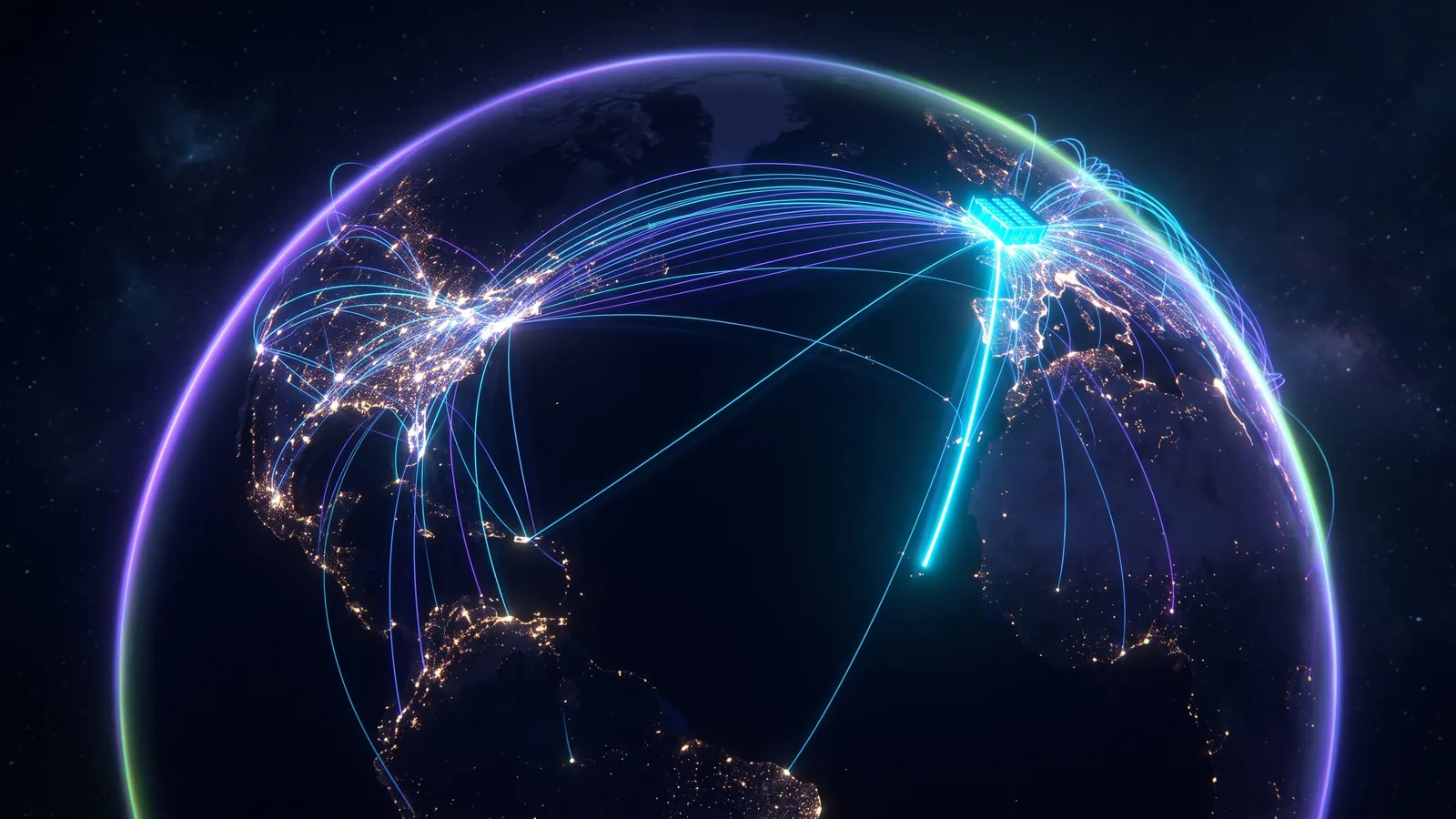
How a CDN hides the distance
Say hello nearby
Handshakes finish at the edge
Lock both legs
Edge to server stays encrypted
Keep copies close
Static files come from the edge
Don't bust the cache
No random tags, no cookies on files
Take the fast lane
Warm, private routes for the rest
Measure it
Watch time to first byte and hit rate
Recap: before and after
Public internet
- New hellos for every connection
- Routes picked by price
- Slows down at busy hours
CDN fast lane
- Warm connections, reused
- Routes picked by live speed
- Private links between cities
Same distance. Fewer trips, and faster ones.
Sources
RFC 9293 — Transmission Control Protocol (three-way handshake).
RFC 8446 — TLS 1.3 (1-RTT full handshake, 0-RTT resumption).
RFC 9111 — HTTP Caching (
Cache-Control,s-maxage,immutablevia RFC 8246).RFC 5861 —
stale-while-revalidate.CDN provider documentation on TLS modes (flexible vs full/strict) and origin shields.
Coming next in the series: How Load Balancers Pick a Server