
AI news · 10 stories

AI news for Oct 18, 2026

Apple strengthens App Store rules against AI image abuse · China proposes export restrictions covering AI technologies · Cloudflare adds ongoing behavioral checks for verified bots

News card: Apple strengthens App Store rules against AI image abuse
Apple

Apple strengthens App Store rules against AI image abuse

Apple clarified its App Review Guidelines on October 16 to address nonconsensual intimate imagery and apps that hide harmful capabilities during review. Developers must implement safeguards, with violations potentially leading to app removal and exclusion from the developer program.

Read at Apple


A glowing antenna broadcasting neon signal rings
Associated Press

China proposes export restrictions covering AI technologies

China published draft restrictions on October 16 covering 40 technologies, including 23 AI technologies ranging from advanced models to agents. The proposal cites national security and could tighten control over technology transfers if adopted.

Read at Associated Press
News card: Cloudflare adds ongoing behavioral checks for verified bots
Cloudflare

Cloudflare adds ongoing behavioral checks for verified bots

Cloudflare introduced an internal system on October 16 that checks whether verified bots respect robots.txt preferences and slow down after HTTP 429 responses. Public reporting and customer-configurable trust thresholds are planned, extending bot oversight beyond identity checks.

Read at Cloudflare
News card: Google clarifies AI training uses for connected Workspace data
Google

Google clarifies AI training uses for connected Workspace data

An October 16 update to Google’s guardrails explainer says users who enable newer Workspace connections can have a subset of that data processed to personalize other Google services. Depending on settings, that subset can also be used to train generative AI models and receive limited human review, making connection settings consequential for privacy.

Read at Google
News card: GitHub makes agentic code-scanning fixes generally available
GitHub

GitHub makes agentic code-scanning fixes generally available

GitHub announced general availability of agentic autofix on October 15 for eligible Enterprise Cloud security customers. Copilot explores the codebase, proposes repairs and reruns CodeQL before opening a draft pull request, bringing validation into the remediation workflow.

Read at GitHub
News card: GitHub adds multi-repository work in Slack and Teams
GitHub

GitHub adds multi-repository work in Slack and Teams

GitHub’s October 15 update lets its Slack and Teams integration create issues, open pull requests and investigate bugs across multiple repositories in one conversation. Improved thread context and repository switching help teams coordinate work spanning several codebases.

Read at GitHub
News card: FLUX.3 Image Klein arrives with layout control in Diffusers
Hugging Face

FLUX.3 Image Klein arrives with layout control in Diffusers

Hugging Face announced day-one Diffusers support for Black Forest Labs’ FLUX.3 Image Klein on October 15. The open model combines text-to-image generation, image editing and bounding-box layout control, giving developers more direct control over composition.

Read at Hugging Face
News card: IBM Granite Switch combines chat, decisions and speech
IBM

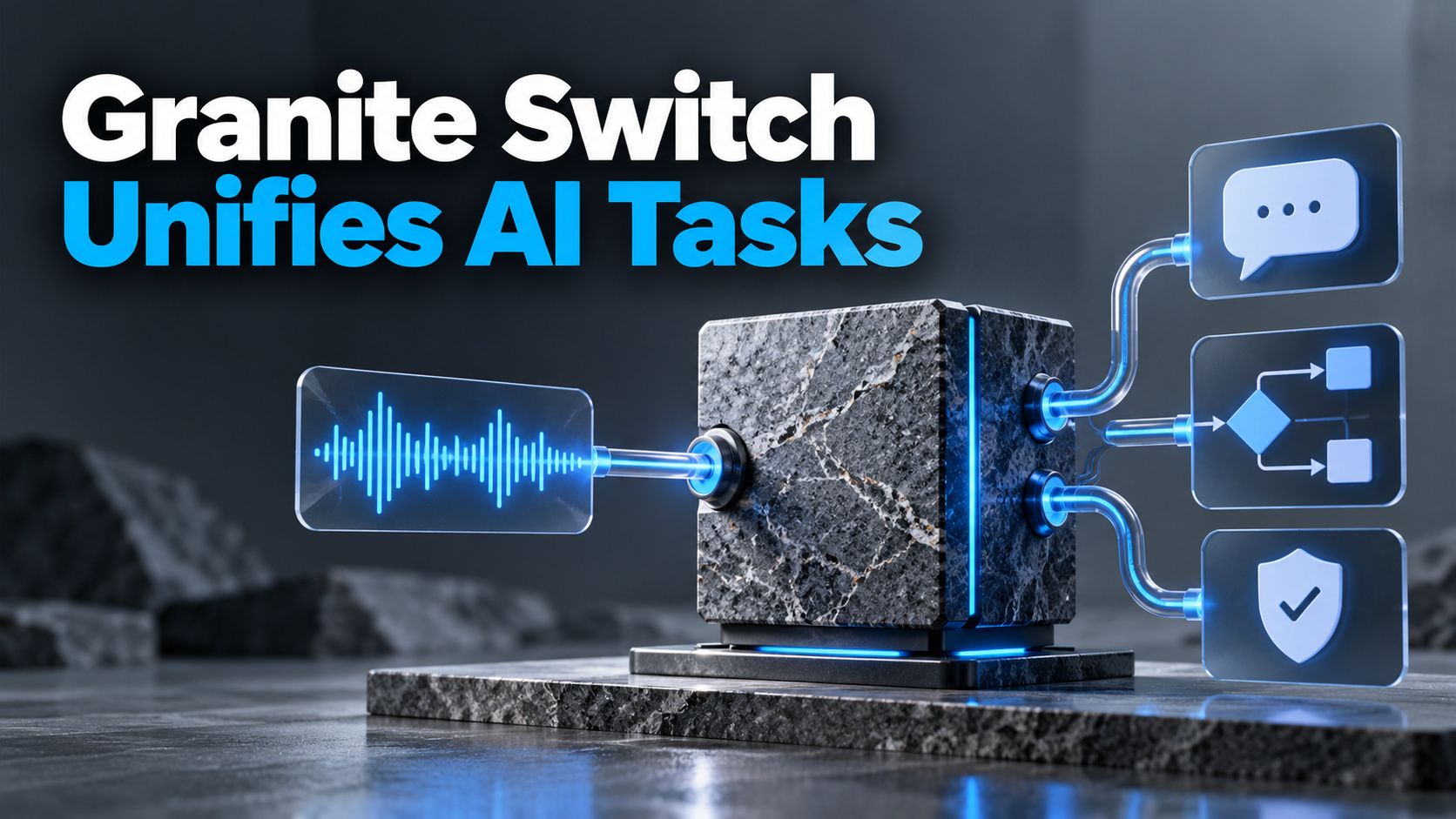
IBM Granite Switch combines chat, decisions and speech

IBM’s Granite Switch 4.1 8B model card dates the release to October 14 and describes chat, structured decisions, safety screening and English speech-to-text through one endpoint. Its Apache 2.0 modular composition can simplify deployment, although the speech encoder and language model are not jointly trained.

Read at IBM
News card: Opsin raises $21 million for enterprise AI-agent security
Newswire

Opsin raises $21 million for enterprise AI-agent security

Opsin announced $21 million in funding led by SYN Ventures and Race Capital on October 15. The company plans to expand tools that help enterprises observe AI agents and detect or contain behavior that deviates from assigned goals.

Read at Newswire
News card: INFUSE benchmarks prompt injection across long agent workflows
arXiv

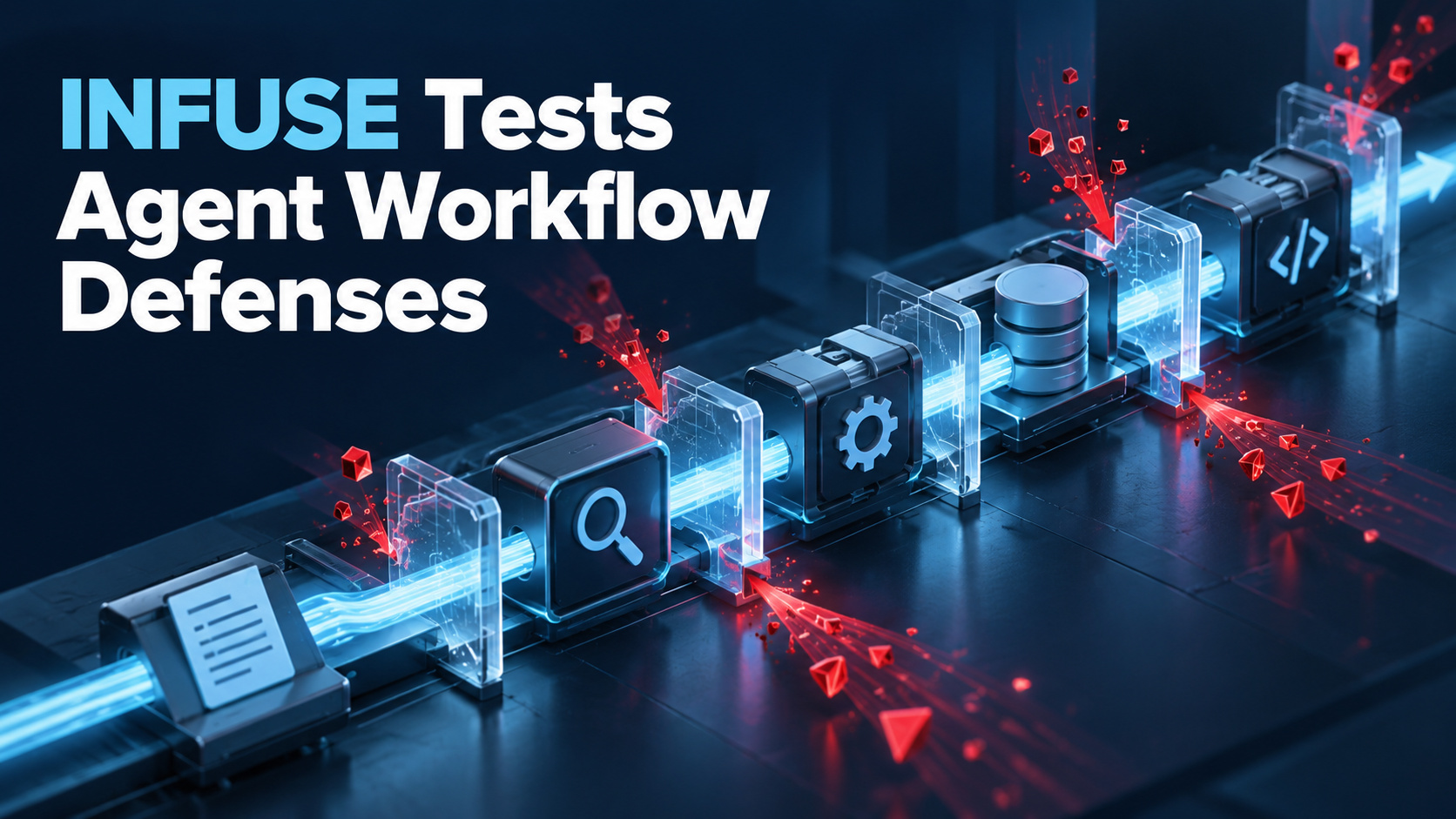
INFUSE benchmarks prompt injection across long agent workflows

The INFUSE preprint, submitted October 14, evaluates indirect prompt injection across 40 tasks and 56 attack scenarios using 19 language models. Its workflow-level tests expose model-dependent vulnerabilities and security–utility trade-offs in defenses, rather than assuming isolated prompt tests capture agent risk.

Read at arXiv

Get the next episode first

Shorts and deep dives on AI system design land on @AI.JoinDev first. Subscribe, or follow the RSS feed.